



A landmark Cambridgeshire trial is testing whether artificial intelligence can detect breast cancer earlier.
The study, funded by the National Institute for Health and Care Research (NIHR), will involve around 700,000 women at 30 sites and is the world’s largest of its kind.
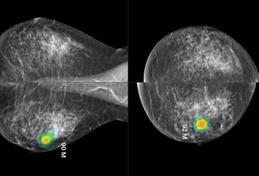
The trial will test an AI tool that helps specialists review mammograms.
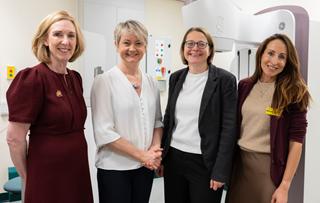
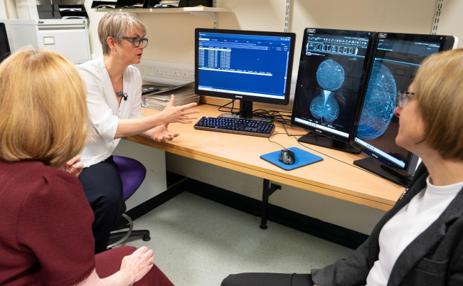
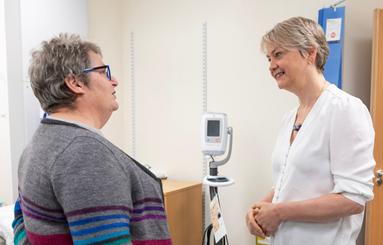
Health Secretary Yvette Cooper launched the study during a visit to Addenbrooke’s Hospital.

Ms Cooper said: "This is the biggest AI breast cancer trial in the world, backed by £10 million of government investment to speed up diagnosis and potentially deliver life-saving improvements.
"If successful, this technology could help women get a breast cancer diagnosis and start treatment much more quickly, giving them the best possible chance of recovery."
Women aged 50 to 71 across the UK are invited for breast screening every three years, with around 2.1 million screenings each year.
Two specialist radiologists review each mammogram, although fewer than one per cent show signs of cancer.

The EDITH trial will use the AI tool alongside clinicians to spot cancers that might otherwise be missed because they are too small.
If successful, the tool could mean some mammograms need only one radiologist’s review, freeing clinicians to focus on diagnosis and patient care.
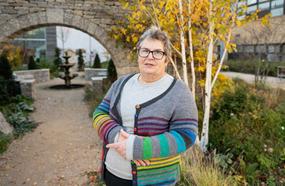
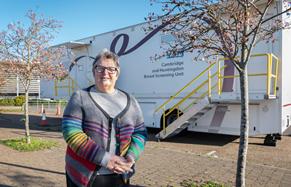
Shirley, 70, from Cambridgeshire, welcomed the trial after a routine screening found her early-stage breast cancer in October 2025, although she is not taking part.

She said: "I feel so lucky my cancer was detected early.
"When I received the invitation to attend, I had no symptoms and no clue anything was wrong.
"My routine mammogram saved my life, so anything that helps other people get diagnosed earlier is crucial.
"That's why this trial is so important."

The AI tool will not change the screening appointment, but it may change how the images are reviewed.
All mammograms will continue to be reviewed by at least one human radiologist.
Professor Fiona Gilbert, from the Department of Radiology at the University of Cambridge and an honorary consultant at Cambridge University Hospitals NHS Foundation Trust, said: "Millions of women have a mammogram each year, and fewer than one in 100 will be diagnosed with cancer.
"EDITH will test whether an AI-assisted mammogram-reading tool can help experts review images more efficiently, while maintaining professional oversight and the standards women expect from NHS breast screening."
Professor Sian Taylor-Phillips, NIHR research professor and professor of population health at the University of Warwick, said: "EDITH will test whether AI can assist NHS staff improve the service for women attending the NHS Breast Screening Programme.
"AI-assisted technology could support staff by flagging areas of a mammogram where cancer might be missed to improve early cancer detection."

Details of the trial will be included in screening invitation letters, along with information on how to opt out.
The trial is a collaboration between the NIHR, NHS England and the UK National Screening Committee.
Read more
Huntingdon men urged to register with a GP and seek help early this Movember
St Neots academy chosen for international reading partnership with Morocco school
Professor Kevin Dunbar, deputy director of public health, England, said: "The NHS Breast Screening Programme is continuing to modernise, and we are looking carefully at how technology developed using artificial intelligence could support the reading of mammograms safely and effectively.
"EDITH will help build the evidence we need, while ensuring patient safety, quality and the expertise of screening professionals remain at the heart of the programme."
As the trial expands, it will use AIR-SP, an AI research screening platform funded by nearly £6 million from the government.
The study supports the NHS 10 Year Health Plan and the National Cancer Plan’s aims.


Share